
My 2024 year in books
Some notes on discovering history and Chicago

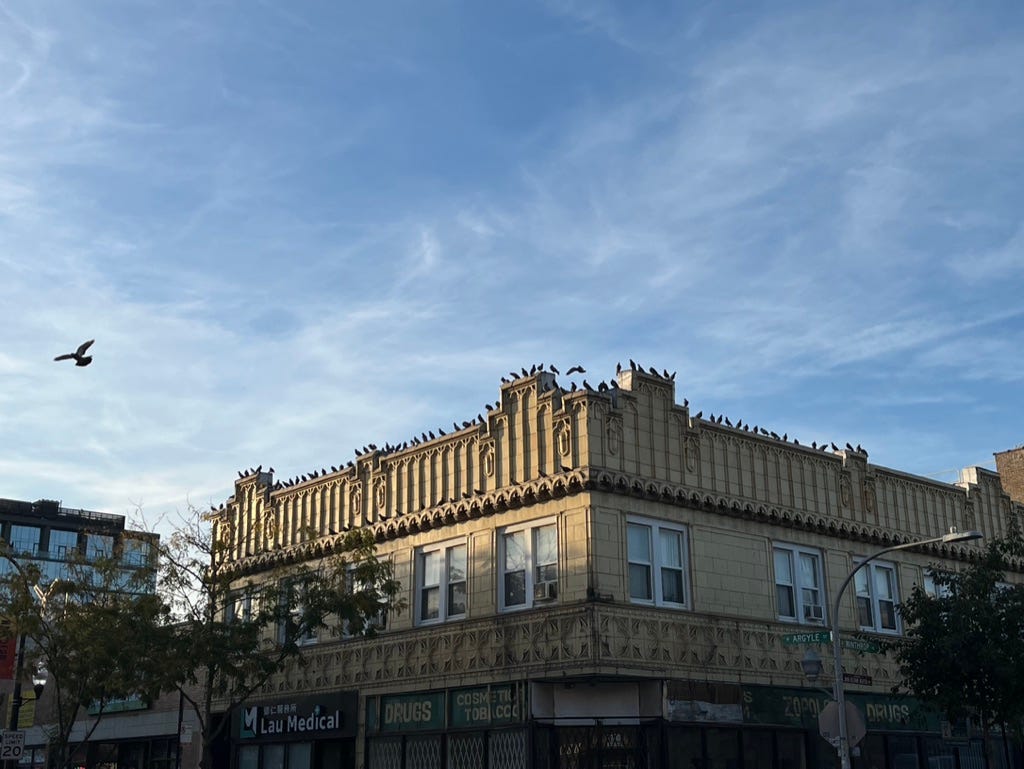
My life changed a lot in 2024 — I graduated college and moved from St. Paul to Chicago — and my year’s reading habits reflected that.
This was the first year that I began to deeply engage with history as a subject of study. Early in January, I read Kenneth T. Jackson’s classic book on American suburbanization, Crabgrass Frontier. As my first scholarly urban history book, Jackson’s work put a lot of contextual pieces into place about how our cities have developed into their current state. In particular, the focus on how transportation networks and residential development patterns interact provided new frameworks and background to explain many things I’ve wondered about the state of our cities today.
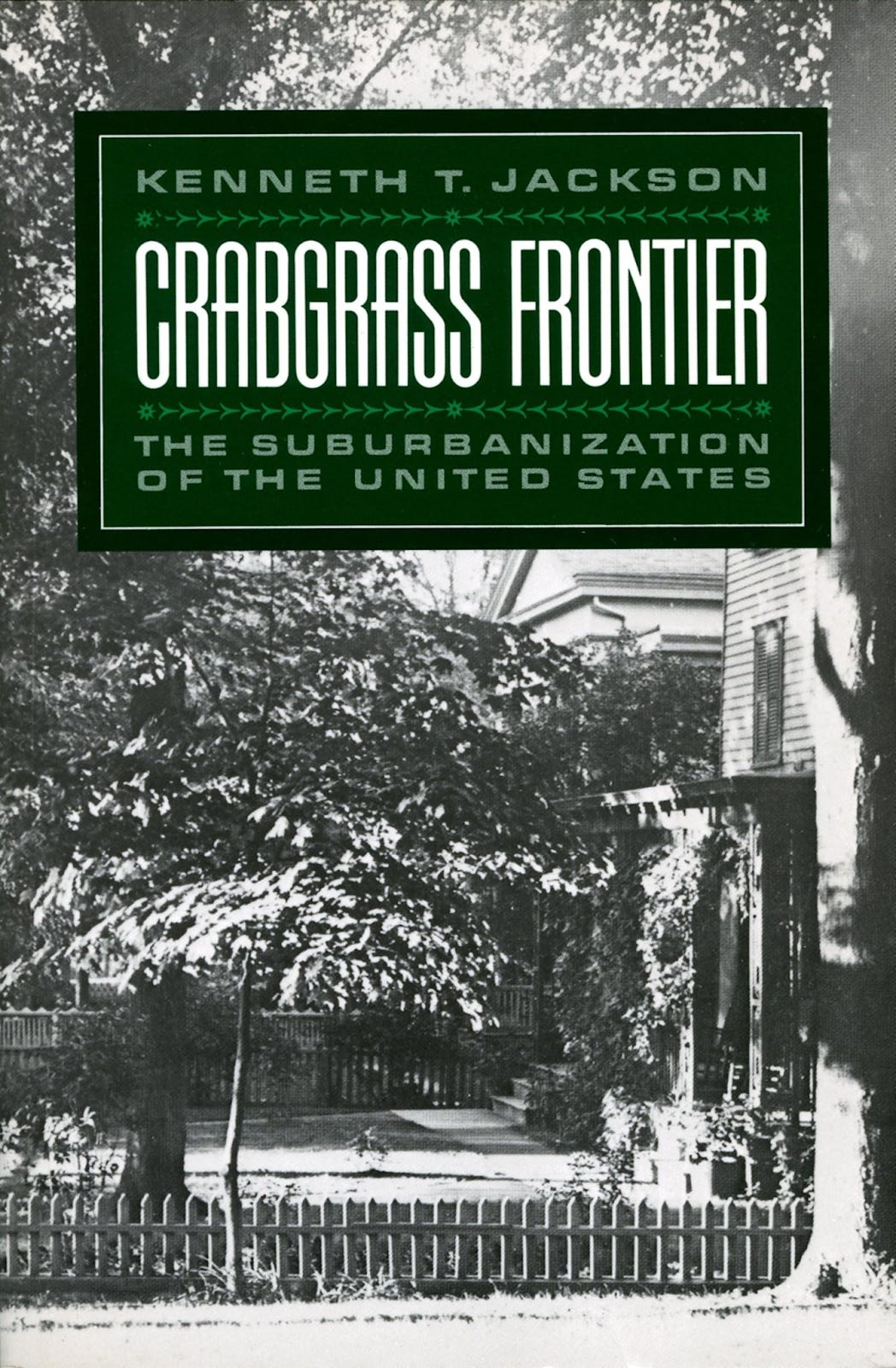
Crabgrass Frontier set me on a larger urban history reading journey. Building a stronger familiarity with urban studies more generally has made history more accessible, and I read Crabgrass Frontier at the right time. A few years ago, I read the first couple chapters of both Keeanga-Yamahtta Taylor’s Race For Profit and Bill Lindeke’s St. Paul, but gave up after I couldn't really connect with the books’ narratives. At the time, I found Taylor’s book too tied to unfamiliar policy contexts for me to understand it, and Lindeke’s history of St. Paul didn’t click when I had so little context about early American urbanization. I returned to them both this year and liked them much more. As I’ve gained a deeper grasp of contemporary urban issues, history has simply become more alive and engaging. It’s difficult to say these things without being cliche, but I’ve learned a lot this year about how valuable history is.
It was new and exciting to engage with historical research and narratives. Over the last few years, I’ve mostly had two “modes” in learning about urbanism: studying urban economics, and following contemporary popular policy debates, especially in the Twin Cities. This has mostly meant reading empirical research papers, journalism, blogs, and policy reports. As a result, I think of myself as fairly knowledgeable about contemporary zoning and land use policy, but I realized that I knew very little about the huge world of urban history. While these previous modes of engagement have given me many tools to make cities legible, history has added a complementary richness, allowing me to take a step back and think about issues with a wider lens.
I’ve also enjoyed reading related “clusters” of books. One of my favorite clusters was three books about early-wave revival and gentrification in core cities: Suleiman Osman’s The Invention of Brownstone Brooklyn, Daniel Kay Hertz’s The Battle of Lincoln Park, and Robert Roscoe’s Milwaukee Avenue.
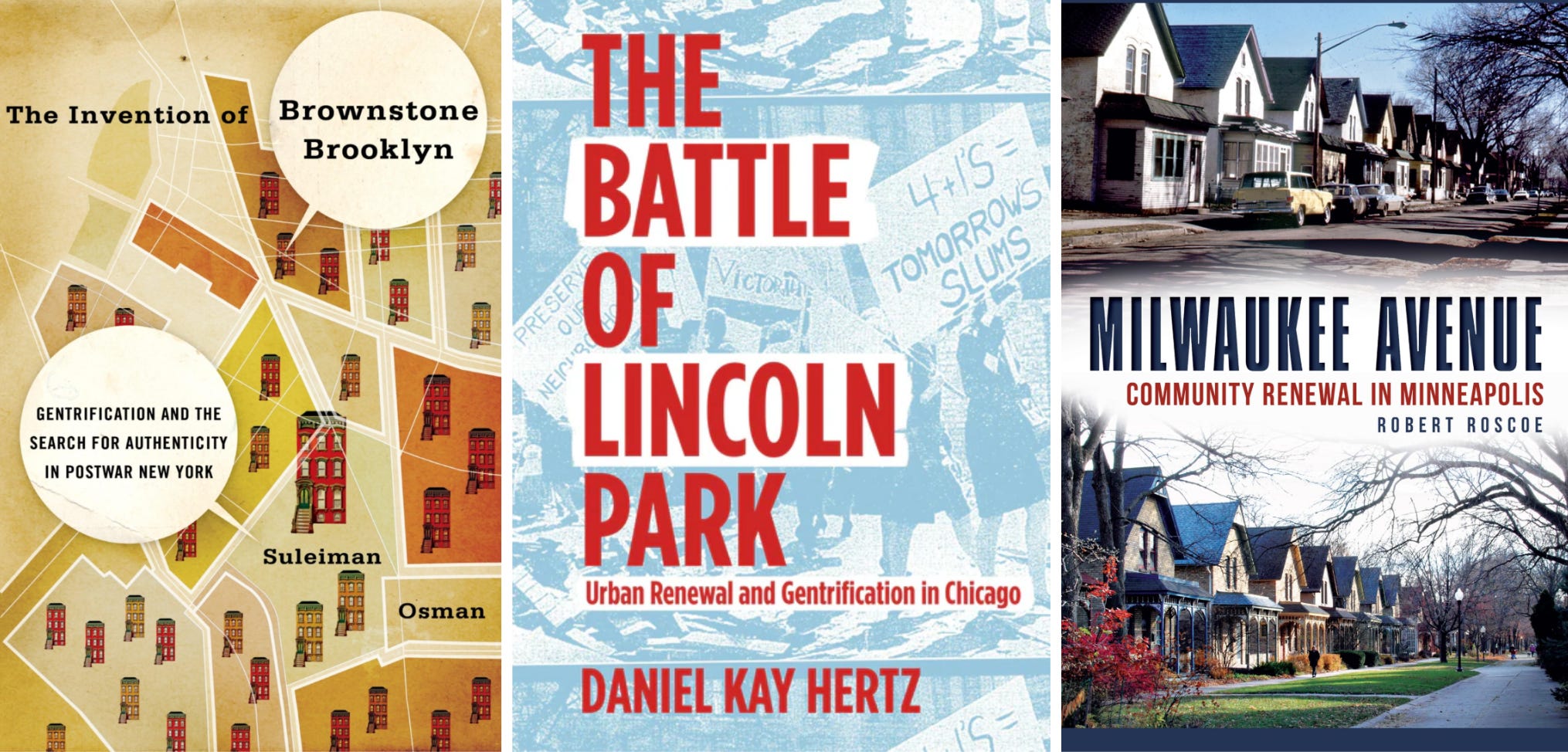
These three books depict neighborhoods in New York, Chicago, and Minneapolis respectively, that all underwent similar cycles of change. These neighborhoods began as moderately-priced neighborhoods with unremarkable housing stock, but emptied out or became impoverished in the urban downturns of the 60s. After residents of these neighborhoods successfully battled urban renewal efforts, artists and young professionals found value in their now-“historic” character and proximity to core city amenities. After a few decades of housing rehabs and inflows of educated white residents, both Brownstone Brooklyn and Lincoln Park became very wealthy and expensive. Notably, Minneapolis’s Milwaukee Avenue area saw similar rehabs of old housing stock, opposition to denser development, and initial inflows of artists and young professionals — but didn’t gentrify in the same way. This difference probably deserves deeper investigation.
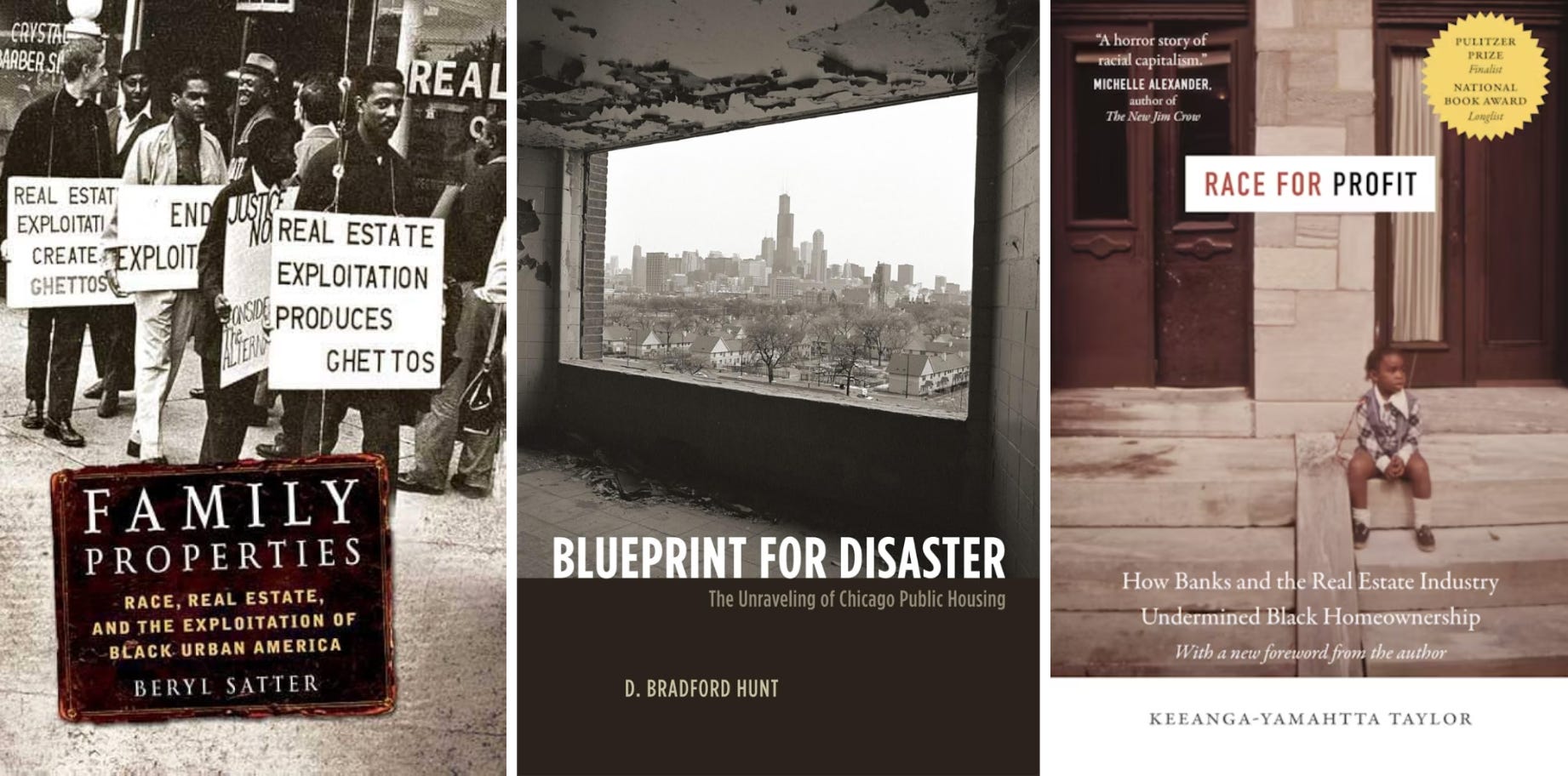
The other cluster of books I’ll mention surrounds racial inequality in Chicago. Every American city has a deep and painful history of anti-black discrimination, and Chicago’s history is at least well-documented. Beryl Satter’s Family Properties and Arnold Hirsch’s Making the Second Ghetto gave immensely valuable, detailed views on some of segregation’s origins in Chicago. Keeanga-Yamahtta Taylor’s Race for Profit and J. Bradford Hunt’s Blueprint for Disaster went deeper on specific policy histories, showing how both good intentions and bad intentions led to continuing racial inequality and housing problems in Chicago. Natalie Y. Moore’s The South Side and Eve L. Ewing’s Ghosts in the Schoolyard helped illuminate more recent legacies of this history.
As a final note, this year I read a few books from the “classic” canon of urban studies. In addition to Crabgrass Frontier, I read William Cronon’s Nature’s Metropolis and Robert Caro’s The Power Broker. I can’t add much to the thousands of words already written about these books. But I will say that they’re all completely deserving of their status, and if you’re thinking about reading them, you should do it.
The full list of my books read this year is below. Although I enjoyed almost all of these books, asterisks denote books that I found particularly outstanding or enlightening.
Career and Family, Claudia Goldin*
The City We Became, N.K. Jemisin
Crabgrass Frontier: The Suburbanization of the United States, Kenneth T. Jackson*
The Invention of Brownstone Brooklyn: Gentrification and the Search for Authenticity in Postwar New York, Suleiman Osman*
St. Paul: An Urban Biography, Bill Lindeke
Chip War: The Fight for the World's Most Critical Technology, Chris Miller
Milwaukee Avenue: Community Renewal in Minneapolis, Robert Roscoe
Escaping the Housing Trap: The Strong Towns Response to the Housing Crisis, Chuck Marohn and Daniel Herriges
American Apartheid: Segregation and the Making of the Underclass, Douglas Massey and Nancy Denton
The Battle of Lincoln Park: Urban Renewal and Gentrification in Chicago, Daniel Kay Hertz*
High-Risers: Cabrini-Green and the Fate of American Public Housing, Ben Austen*
The Worldly Philosophers: The Lives, Times and Ideas of the Great Economic Thinkers, Robert Heilbroner
Modern Housing for America: Policy Struggles in the New Deal Era, Gail Radford*
The Dispossessed, Ursula K. Leguin*
Making the Second Ghetto: Race and Housing in Chicago 1940-1960, Arnold Hirsch*
The Warmth of Other Suns: The Epic Story of America's Great Migration, Isabel Wilkerson*
American Pharaoh: Mayor Richard J. Daley — His Battle for Chicago and the Nation, Adam Cohen and Elizabeth Taylor*
Boss: Richard J. Daley of Chicago, Mike Royko
The Argonauts, Maggie Nelson
When the Clock Broke: Con Men, Conspiracists, and How America Cracked Up in the Early 1990s, John Ganz
Nature’s Metropolis: Chicago and the Great West, William Cronon*
Family Properties: Race, Real Estate, and the Exploitation of Black Urban America, Beryl Satter*
Race for Profit: How Banks and the Real Estate Industry Undermined Black Homeownership, Keeanga-Yamahtta Taylor*
Oryx and Crake, Margaret Atwood*
The Plan of Chicago: Daniel Burnham and the Remaking of the American City, Carl Smith
Ladies and Gentlemen, the Bronx Is Burning: 1977, Baseball, Politics, and the Battle for the Soul of a City, Jonathan Mahler
Chelsea Girls, Eileen Myles
Blueprint for Disaster: The Unraveling of Chicago Public Housing, D. Bradford Hunt*
The Power Broker, Robert Caro*
The South Side: A Portrait of Chicago and American Segregation, Natalie Y. Moore
Ghosts in the Schoolyard: Racism and School Closings on Chicago’s South Side, Eve L. Ewing
Diminished Democracy: From Membership to Management in American Civic Life, Theda Skocpol*